
Tesla cuts 2026 spending plan to $20 billion; shares turn lower
Tesla cut its 2026 capital spending forecast to about $20 billion from more than $25 billion on its earnings call Wednesday, after profit fell 43% but cash flow beat forecasts. Shares, up about 2% after the results, turned lower after hours.
AI-assisted · US Brief desk · Sources listed below
What happened
Tesla cut its forecast for 2026 capital spending to about $20 billion from more than $25 billion, Chief Financial Officer Vaibhav Taneja said on the company's earnings call Wednesday. He said the change came "as a result of managing our capital deployment efficiently" and that Tesla plans to fund the spending mainly from operating cash flow, according to a transcript of the call. Tesla did not say what it would spend less on, Reuters reported.
Why it matters
Tesla's pitch to investors is that heavy spending now on AI computing, robotaxis and robots will pay off later. A lower spending plan makes the balance sheet stronger ahead of possible merger talks with SpaceX, but it raises the question of whether Tesla is investing enough to meet the timelines Musk has promised, Reuters noted. For the roughly 1.7 million drivers paying for its self-driving software, the call also set new dates for features in Europe and for robotaxi rides in customer cars.
More context
Shares turned lower: The stock rose about 2% in extended trading after the results were released, then reversed during the call. It was last down about 2%, Reuters reported; AP put the after-hours drop at 3.2%, after a 3.6% gain in the regular session. Tesla shares are down about 14% this year, Reuters said.
The quarter: Net income fell 43% to $787 million, or 22 cents a share, from $1.37 billion a year earlier, while revenue was nearly flat at $28.05 billion, according to Tesla's filing with the SEC. Adjusted earnings of 48 cents a share beat the 43 cents analysts expected, according to LSEG data cited by CNBC. Free cash flow was $1.53 billion, when analysts had expected a $4.92 billion cash burn, mainly because Tesla spent $4.7 billion on capital projects against the roughly $7.5 billion analysts expected, Reuters reported.
Borrowing and future spending: Taneja said Tesla secured the ability to borrow up to $30 billion during the quarter to support future spending but does not plan to draw on it this year. He said capital spending will keep growing over the next few years as Tesla adds robotaxis, expands Optimus robot production, buys more AI computing and builds a chip plant.
Robots and self-driving: Elon Musk said on the call that Tesla has started early production of its Optimus humanoid robot on a high-volume line in Fremont, California, but that reaching 20,000 units a week will take "probably at least a year, maybe a little longer," according to the transcript. He said he expects Optimus deliveries to outside companies around the end of next year. On Europe, Musk said Tesla is hoping for EU-wide approval of its supervised self-driving software "maybe within a few months," adding, "I would be surprised if it takes longer than Q1." He also said vehicle demand "is exceeding our production by a significant margin" and that Tesla is aiming for 5 million vehicles a year by about 2030.
The merger backdrop: A day earlier, on SpaceX's earnings call, Musk said both companies had formed special committees to discuss combining them and called a merger a good idea, while noting that Tesla shareholders would have to approve. On Wednesday he declined to discuss it further, AP and Reuters reported. "Lower capex suggests less of an 'all-in' approach to the AI arms race than one would expect from Elon," Ryan Lee of ETF provider Direxion told Reuters.
What changed after the release: The results alone showed a cash surprise. The call added that spending for the full year is coming down, not just arriving later in the year, though Tesla did not say which projects are affected. Analysts questioned whether the cut is a shift between quarters or a slower ramp-up, CNBC TV18 reported, and the stock reversed its early gain during the call, Reuters reported.
What's still unknown: Which projects Tesla is slowing to reach the lower $20 billion figure; how much it expects to spend in 2027; and whether the SpaceX talks produce a formal proposal that Tesla shareholders would vote on.
9 listed sources
- Reuters via Investing.com, Oct. 21, 2026 (updated)
- AP, Oct. 21, 2026
- Tesla Q3 2026 earnings call transcript, StockAnalysis
- CNBC TV18, Oct. 22, 2026
- Tesla Q3 2026 update, SEC Form 8-K Exhibit 99.1, Oct. 21, 2026
- Reuters via MarketScreener, Oct. 21, 2026
- Reuters, Apr. 23, 2026
- CNBC, Oct. 21, 2026
- Investopedia, Oct. 21, 2026
References listed by US Brief; a source count is not a verification score.
Editorial sourcing notes
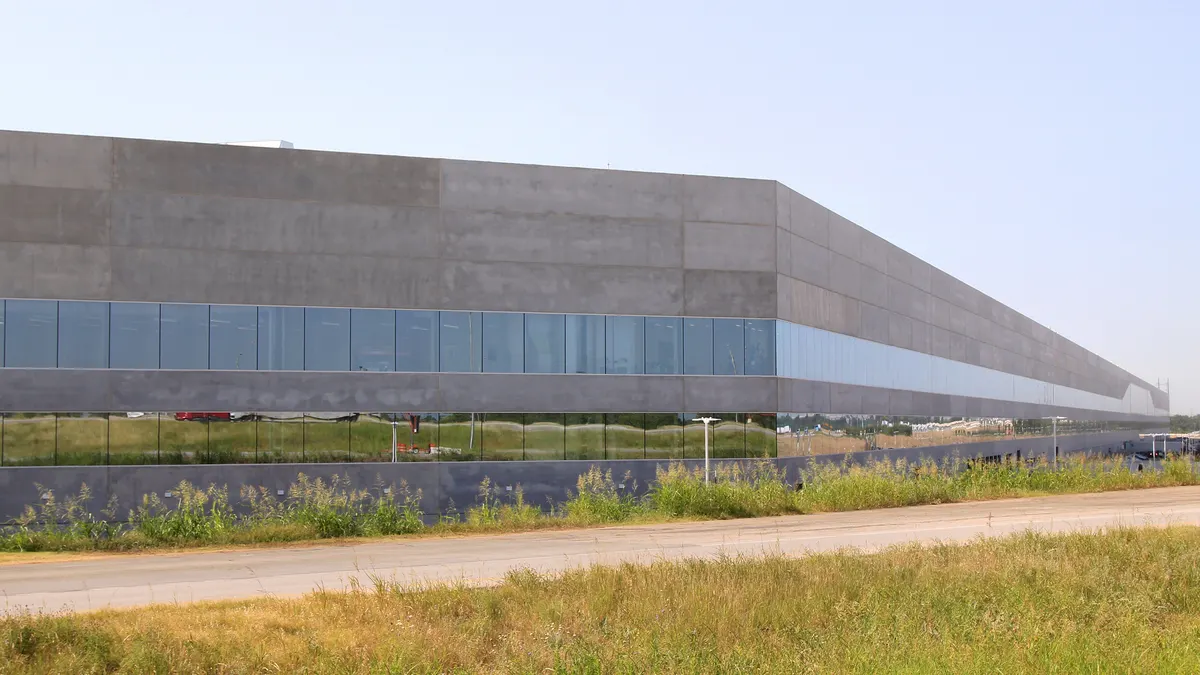
Updated Oct. 21, 2026, 7:20 p.m. PT with the earnings call: the lower capital spending forecast, new borrowing capacity, Optimus and Europe self-driving timelines, and the after-hours reversal. Results figures come from Tesla's third-quarter update filed with the SEC. Where news reports differ from the filing (CNBC's capital spending and year-ago profit figures), US Brief uses the filing. Analyst estimates follow LSEG via CNBC and Reuters. After-hours share moves were early, differ by outlet and time, and can change by the open. Hero photo shows Gigafactory Texas in 2022 (file photo).
Like US Brief? You can support it with a tip.