
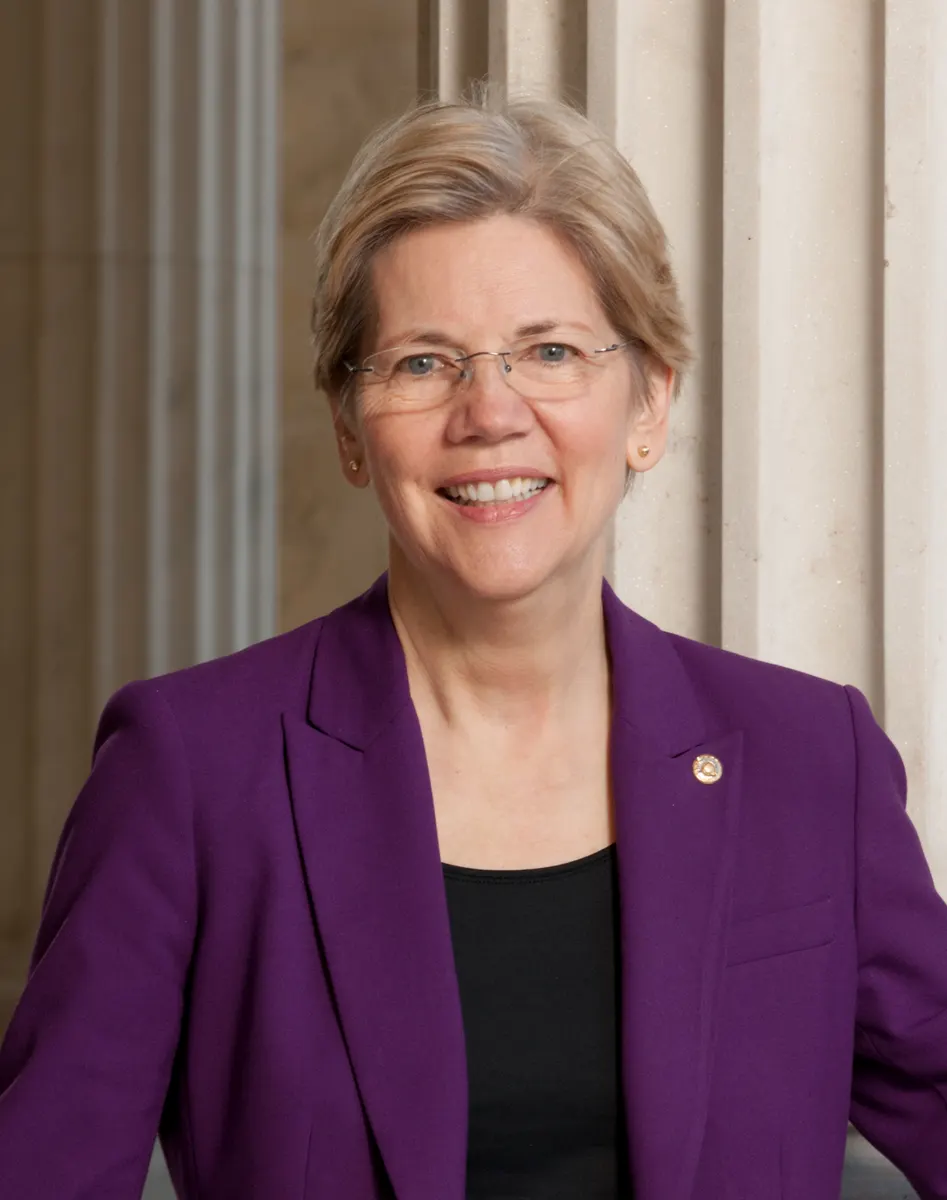
Warren-led senators press Meta, Amazon, Google, and Microsoft on AI tax breaks
Sen. Elizabeth Warren and other Senate Democrats sent letters Sunday night to the CEOs of Meta, Amazon, Alphabet, and Microsoft seeking details on tax deductions tied to AI and data-center spending under the 2025 Republican tax law, CNBC reported. The lawmakers asked for answers by Oct. 12; the companies and White House had not immediately commented.
AI-assisted · US Brief desk · Sources listed below
What happened
According to CNBC, Sens. Tina Smith, D-Minn., Jeff Merkley, D-Ore., Elissa Slotkin, D-Mich., Bernie Sanders, I-Vt., and Richard Blumenthal, D-Conn., joined the letters. The lawmakers asked each company what AI- and data-center-related deductions it has claimed and what lobbying it did before the 2025 law passed, and they requested responses by Oct. 12. Spokespeople for all four companies and the White House did not immediately respond to CNBC's request for comment.
Why it matters
The letters put Big Tech's lawful use of 2025 bonus-depreciation and related write-offs into the midterm debate over who pays for the AI buildout — taxpayers via forgone revenue, ratepayers via power costs, or the companies themselves — without yet producing company-by-company disclosure of AI-specific deductions.
What’s next
Watch for company replies by the Oct. 12 deadline, any White House or Republican rebuttal, and whether the Ratepayer Protection Act returns to the Senate floor this week.
More context
Sen. Elizabeth Warren, D-Mass., led Senate Democrats in sending letters Sunday night to the chief executives of Meta, Amazon, Alphabet, and Microsoft seeking information on tax deductions tied to artificial intelligence and data-center spending under the 2025 Republican tax-and-spending package known as the "one big beautiful bill" act, CNBC reported Monday after obtaining the letters exclusively.
Why they say it matters: "Americans across the country are worried about the impacts of artificial intelligence (AI) on their lives — from increased utility bills to threats of job losses and cyberattacks," the senators wrote, per CNBC. "But rather than meaningfully regulate Big Tech companies and slow down the mad rush to deploy this new technology, Republicans in Washington have passed tax subsidies for AI development and AI data centers."
The tax numbers they cite: Warren's letter, as summarized by CNBC, said corporate tax payments are down 25% this year, citing Politico reporting that quoted budget forecasters. Separately, the Congressional Budget Office projected in February that federal corporate income-tax collections would be 10.6% lower in 2026 than a year earlier — $404 billion versus $452 billion. Pointing to SEC filings, the letters said Microsoft's current federal income-tax expense fell by more than $11 billion from fiscal 2025 to fiscal 2026; Amazon's federal income-tax payment fell by nearly $8 billion from fiscal 2024 to 2025; and Alphabet's combined current federal and state income-tax expense fell by more than $7 billion over that same stretch.
Meta spotlight: In the letter to Meta CEO Mark Zuckerberg, the senators said Meta paid $2.8 billion in federal income tax in 2025, down from $9.6 billion in 2024, while earning roughly the same profit both years, CNBC reported. They tied that drop to Meta's roughly $72 billion in capital expenditures last year — the "vast majority" for data-center construction and other AI spending — and argued much of it "may have been" immediately deductible under the new law's provisions. Those causal links are the senators' characterization, not audited findings.
Politics and lobbying: The letters also said each of the four companies contributed $1 million to President Donald Trump's inauguration and spent millions lobbying Congress and federal agencies ahead of the bill's passage, CNBC reported. "Your company has spent lavishly to stay on the good side of President Trump, and it appears that you are now seeing your investment bear fruit," the senators wrote, per CNBC.
Midterms backdrop: CNBC framed the inquiry against intensifying public backlash to AI and data centers ahead of the 2026 midterms, and noted Senate Democrats have tried to cast themselves as the more pro-regulation party while Republicans push a Ratepayer Protection Act on data-center utility costs — a measure Sen. Martin Heinrich, D-N.M., previously blocked as too weak and that CNBC said may return to the Senate this week. US Brief previously covered that bill in pol-ratepayer-data-centers.
Uncertainty: No company responses were public when CNBC published. Tax-payment drops cited from filings and letters are not, by themselves, proof of improper claims; claiming a statutory deduction is generally lawful. Secondary accounts differ on which senators signed; we follow CNBC's exclusive report of the letters. Do not treat unverified senator-office estimate figures from other sites as confirmed company deductions.
4 listed sources
- CNBC (Justin Papp), Sep 28, 2026: Meta, Google, Amazon, Microsoft draw Warren questions about AI tax subsidies
- Quartz (Cris Tolomia), Sep 28, 2026: Senate Democrats question Big Tech on AI tax breaks in "one big beautiful bill"
- InvestmentNews (Leo Almazora), Sep 28, 2026: AI tax breaks draw Warren probe of Meta, Google, Amazon, Microsoft
- Prior US Brief: Senate Republicans schedule data-center power bill vote to blunt midterm affordability hit (Senate Ratepayer Protection Act / data-center power costs)
References listed by US Brief; a source count is not a verification score.
Editorial sourcing notes
Primary sourcing is CNBC (Justin Papp), Sep 28, 2026, 8:00 a.m. EDT, which said the letters were sent Sunday night and shared exclusively with CNBC. Co-signer list (Smith, Merkley, Slotkin, Sanders, Blumenthal), tax-payment figures attributed to the letters/SEC filings, Meta capex and inaugural-contribution claims, Oct. 12 response deadline, and non-response from companies/White House follow that CNBC report. Quartz and InvestmentNews same-day wraps corroborate Warren leadership and Meta/Amazon/Alphabet/Microsoft targets but name fewer co-signers; when lists conflict, prefer CNBC's fuller roster and note it is CNBC's account of the letters. These are information requests about statutory deductions — not findings of illegality. Do not treat senator-office estimate figures from secondary blogs as company-confirmed deductions. Distinct from US Brief Senate Republicans schedule data-center power bill vote to blunt midterm affordability hit (Ratepayer Protection Act / utility cost shift).
Like US Brief? You can support it with a tip.