
Trump says 'no strike today,' weighs Iran deal or 'finish them off'
President Trump ruled out a U.S. strike on Iran on Sunday but told Fox News the only question is whether to make a deal or "finish them off," as Qatari mediators met in Tehran and Yemen's Houthis claimed new attacks on Saudi sites. Shipping data does not back his claim that Hormuz traffic tops pre-war levels.
AI-assisted · US Brief desk · Sources listed below
What happened
President Trump told reporters Sunday there would be no U.S. strike on Iran that day, a day after saying a new attack could come "maybe tomorrow." "The answer is no. There will not be a strike today," he said before leaving Washington for a campaign stop in Michigan, according to Iran International and The American Conservative.
In a phone interview aired Sunday on Fox News' "Sunday Morning Futures," Trump framed his choice in stark terms: "Do I make a deal with them, or do I finish them off? That's the only question." He also said, "We now control the Hormuz Strait. We get everything, they get nothing," and said more business is moving through the strait than before the war, according to CBS News, Iran International and Breaking The News.
Asked at Joint Base Andrews about an intelligence memo reported Friday that warned Iran is working to target U.S. personnel, Trump said, "There are two very different sets of intelligence reports—I have them both," adding that the U.S. has "very advanced sets of intelligence on Iran," The American Conservative reported. He did not say what the second set of reports concludes.
Why it matters
The standoff is keeping fuel prices high nine days before the Nov. 3 midterms. AAA's national average for regular gasoline was $4.29 a gallon Sunday, down from $4.49 a month ago but up from $3.06 a year ago. Diesel averaged $6.35. Brent crude settled at $116.72 a barrel Friday, CBS reported.
More context
What the evidence shows: Trump's claim that Hormuz traffic now beats pre-war levels is not supported by the latest shipping data. Ship-tracking firm Kpler's Oct. 22 briefing put seven-day average oil flows through the strait at about 13.0 million barrels a day, roughly 76% of the pre-war baseline of 17.1 million, with about 14 tanker crossings a day versus about 50 before the war. Kpler notes its latest readings are preliminary and usually revised up, and that Gulf producers have rerouted exports through Oman and Red Sea outlets, so total non-Iranian Middle East crude supply (about 16.8 million barrels a day) is running above its 2025 average. Britain's foreign ministry also described strait traffic Sunday as "sharply down on pre-war levels," CBS reported.
Diplomacy is still moving. Qatari mediators were in Tehran on Sunday in an effort to ease tensions that is coordinated with Washington, Reuters reported, citing an official briefed on the talks. Neither the U.S., Iran nor Qatar has released a readout. Iranian Foreign Minister Abbas Araghchi said Tehran's seven-day proposal, under which Iran would reopen the strait within a week if Washington accepts its conditions, remains on the table. He also said, "Whether there is war or not, our policies remain the same," according to CBS.
In Saudi Arabia, Riyadh's King Khalid International Airport reopened terminals 1 and 2 on Sunday after a closure of more than two weeks that followed earlier strikes, CBS reported. Hours later, Houthi military spokesman Yahya Saree claimed new attacks on the airport, the King Khalid air base at Khamis Mushait and a naval base in Jazan. The Saudi-led coalition said it intercepted a ballistic missile and a drone headed for Riyadh and 10 ballistic missiles fired toward the south. Saudi authorities have not confirmed any hits, and the Houthi claims could not be independently verified.
Israel is also on alert. Prime Minister Benjamin Netanyahu said Sunday that Israel has intelligence that Iran and its allies could launch attacks to disrupt Tuesday's Israeli election. "Don't test us. You will suffer disproportionate blows," he said in a video recorded at an Arrow missile-defense battery, Iran International reported. Iran's state-affiliated Tasnim news agency claimed Iranian forces shot down a U.S. drone near Bandar Abbas; the U.S. military has not confirmed that.
How the message shifted over 48 hours: On Friday, an intelligence memo warning that Iran is working to target U.S. personnel was reported. On Saturday, Trump said a strike could come "maybe tomorrow" or a deal could be reached. On Sunday, he ruled out a strike that day while telling Fox the only question is a deal or "finish them off," as Qatari mediators met in Tehran.
What's still unknown: whether the Qatari mission produced any proposal Washington will accept; what the second intelligence assessment Trump cited says; whether any Houthi missiles struck Saudi targets Sunday; and whether the Tasnim drone claim is true.
9 listed sources
- Iran International, Oct. 25, 2026
- The American Conservative, Oct. 25, 2026
- CBS News live updates, Oct. 25, 2026
- Reuters via The Times of Israel, Oct. 25, 2026
- Breaking The News, Oct. 25, 2026
- Al Jazeera, Oct. 25, 2026
- Kpler media briefing, Oct. 22, 2026
- AAA gas prices, Oct. 25, 2026
- Scripps News, Oct. 24, 2026
References listed by US Brief; a source count is not a verification score.
Editorial sourcing notes
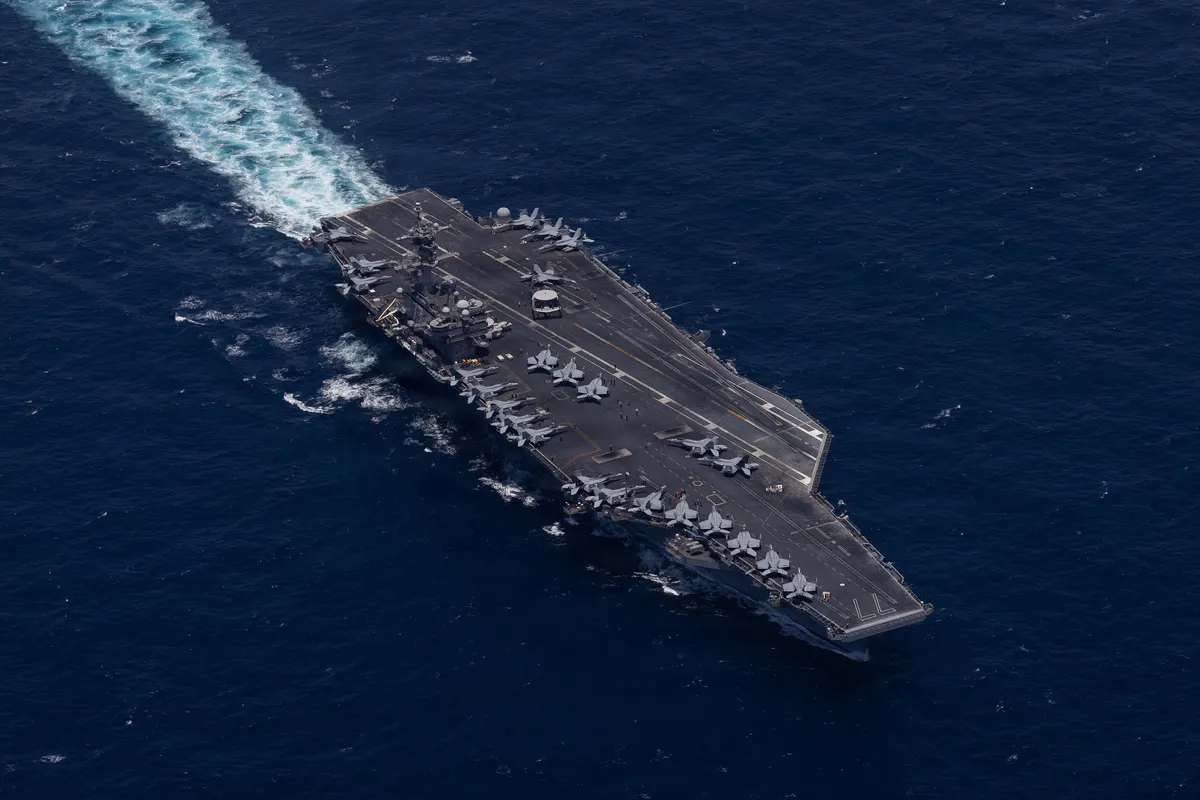
Updated Sunday afternoon. Sourcing: Iran International and The American Conservative for Trump's Sunday remarks and his Fox News interview; CBS News live coverage (with AFP) for Saudi airport, Houthi and coalition claims and Araghchi's comments; Reuters (via The Times of Israel) for the Qatari mediation; Kpler's Oct. 22 media briefing and AAA for the shipping and fuel-price data. Houthi and Iranian military claims, including the Tasnim drone claim, could not be independently verified. Both photos are file images, not from this weekend.
Like US Brief? You can support it with a tip.