
FAA orders pump checks on 334 U.S. Boeing 777s after wheel-well fire
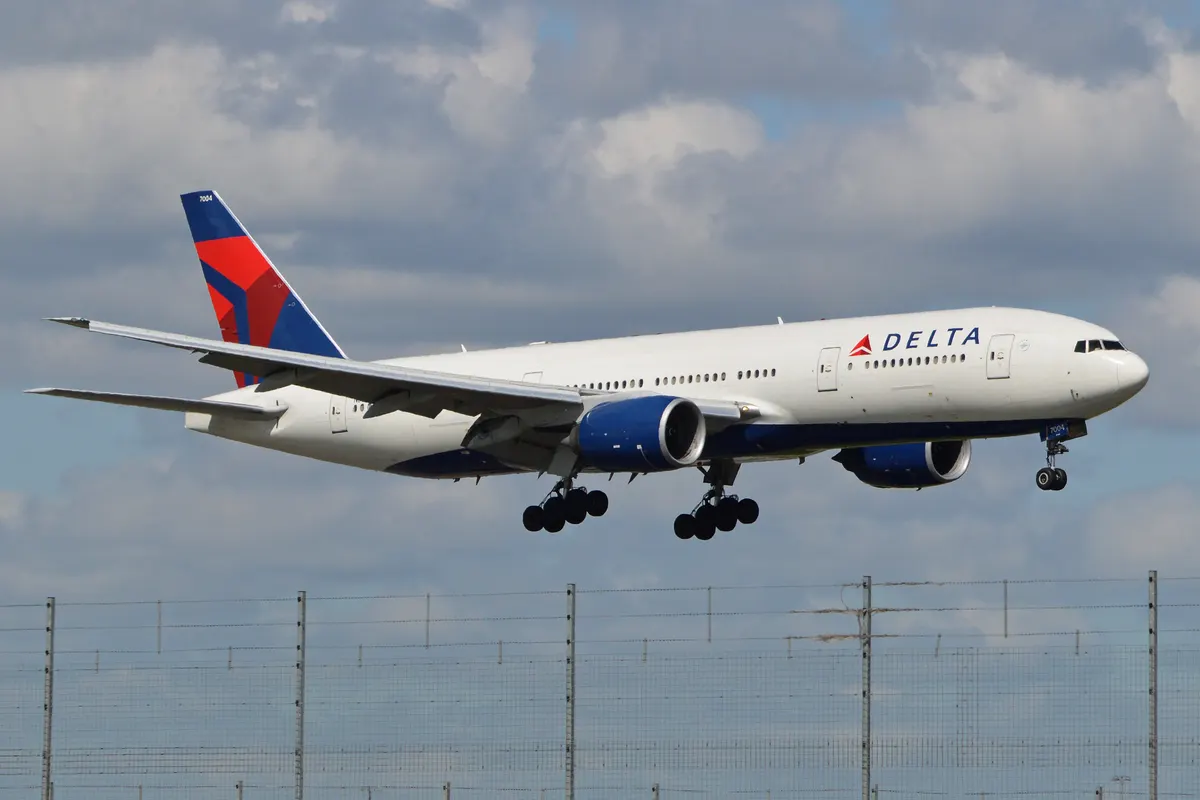
A new FAA airworthiness directive covering all U.S.-registered Boeing 777-200/-200LR/-300/-300ER and 777F jets requires a records check or inspection for a landing-gear hydraulic pump that can overheat and ignite a fire in the main landing-gear wheel well. The rule, effective Nov. 2, 2026, also bars installing the affected pump part number going forward; operators have up to 60 months to replace any already installed.
AI-assisted · US Brief desk · Sources listed below
What happened
Investigators traced the fire to an overheated alternating-current motor pump (ACMP) that helps move the main landing gear. The FAA said a lock washer and nut were missing from a moving contact in the related electrical load control unit, leaving the pump on continuous two-phase power instead of cutting off as designed. That overheating can leak hydraulic fluid and ignite a fire in the wheel well — an area without the dedicated fire-detection and suppression hardware used in engines or cargo holds — with possible damage to the airplane, loss of continued safe flight and landing, or injury.
Why it matters
The 777 remains a workhorse long-haul jet for U.S. passenger and cargo carriers. The directive is a fleet-wide safety fix, not a grounding: airplanes can keep flying while the work is scheduled into regular maintenance through November 2031. Separately, commenters noted the same pump part number appears on other Boeing models; the FAA said it would not delay the 777 rule and may issue additional rulemaking for other types after Boeing released related service bulletins in March 2026.
What’s next
Watch Nov. 2, 2026, when the parts-installation ban takes effect; airline and freighter operators' progress against the 60-month replacement clock; and whether the FAA follows with parallel directives for other Boeing models that use the same pump.
More context
The Federal Aviation Administration has issued a final airworthiness directive requiring U.S. operators of Boeing 777 freighters and passenger variants to check — and in many cases replace — a landing-gear hydraulic pump after an in-service fire in a main landing-gear wheel well. AD 2026-19-04 applies to all U.S.-registered Model 777-200, -200LR, -300, -300ER, and 777F airplanes, a fleet the FAA pegs at 334 aircraft.
What the order requires: Operators must do a records check or physical inspection for ACMP part number 731966 (required for 290 of the 334 airplanes) and replace any affected pump with an approved part — 3033115-100, or alternates 66133-06 or 66068-08 — following Boeing Alert Requirements Bulletin 777-29A0047 RB (Sep 11, 2025). As of the AD's effective date, Nov. 2, 2026, no one may install P/N 731966 on an airplane covered by the rule. Already-installed affected pumps must be replaced within 60 months after that effective date. The FAA estimates about $170 per airplane for the inspection/records review ($49,300 across the affected U.S. fleet) and up to about $77,099 per airplane if a pump must be replaced, with some costs possibly covered by warranty.
2 listed sources
- Federal Register / FAA, AD 2026-19-04 (Docket FAA-2025-3997; Amendment 39-23471), final rule — Airworthiness Directives; The Boeing Company Airplanes
- FAA NPRM background, Nov 17, 2025 (90 FR 51216), as summarized in the final-rule preamble
References listed by US Brief; a source count is not a verification score.
Editorial sourcing notes
All technical details, fleet counts, costs, effective date, and compliance times follow the FAA final rule AD 2026-19-04 published on federalregister.gov (FR Doc. 2026-19751; filed Sep 25, 2026; Federal Register publication date Sep 28, 2026). The AD does not ground the fleet. Part-number and bulletin citations are from the rule text. This digest is separate from US Brief's earlier 737 MAX navigation-software coverage (FAA reviews Boeing 737 MAX software glitch that can drop automated landing guidance).
Like US Brief? You can support it with a tip.